
Data-Driven Planning: Turning Insight Into Impact
Successful facility planning doesn’t start with assumptions; it starts with data. A data-driven process transforms complex challenges—from competing stakeholder demands and tight budgets to difficult site constraints—into clear, confident, and defensible decisions. It ensures every recommendation and investment is rooted in measurable insight, stakeholder input, and real-world conditions, allowing leaders to move forward with clarity and community support.
This approach is about more than just identifying needs. It’s about understanding priorities, evaluating constraints, and aligning design solutions with long-term goals. Through a structured and transparent process, we transform complex information into actionable strategies that guide decision-making from the earliest conversations through final implementation.
From Metrics to Meaning: Gathering the Right Data
Effective data-driven planning begins with comprehensive discovery. We analyze facility conditions, programmatic needs, space utilization, site constraints, regulatory requirements, and financial parameters. Equally important, we engage the people who experience these environments every day.
This combination of hard data and human experience directly informs design outcomes.
- At Gahanna Lincoln High School, a traffic study helped reconfigure vehicular patterns for a new building, while meetings with neighbors identified pedestrian access issues and guided the placement of outdoor activity zones. We quantified stakeholder needs and preferences into a dashboard district leadership could use to make final decisions.
- For Akron Public Schools, stakeholder engagement and site analysis revealed two major challenges: the preferred building location had unsatisfactory soil conditions, and the desired auditorium size exceeded the budget. Our process provided the clarity needed to shift the building to a feasible location and modify the space program to accommodate the larger auditorium, balancing stakeholder desires with project realities.
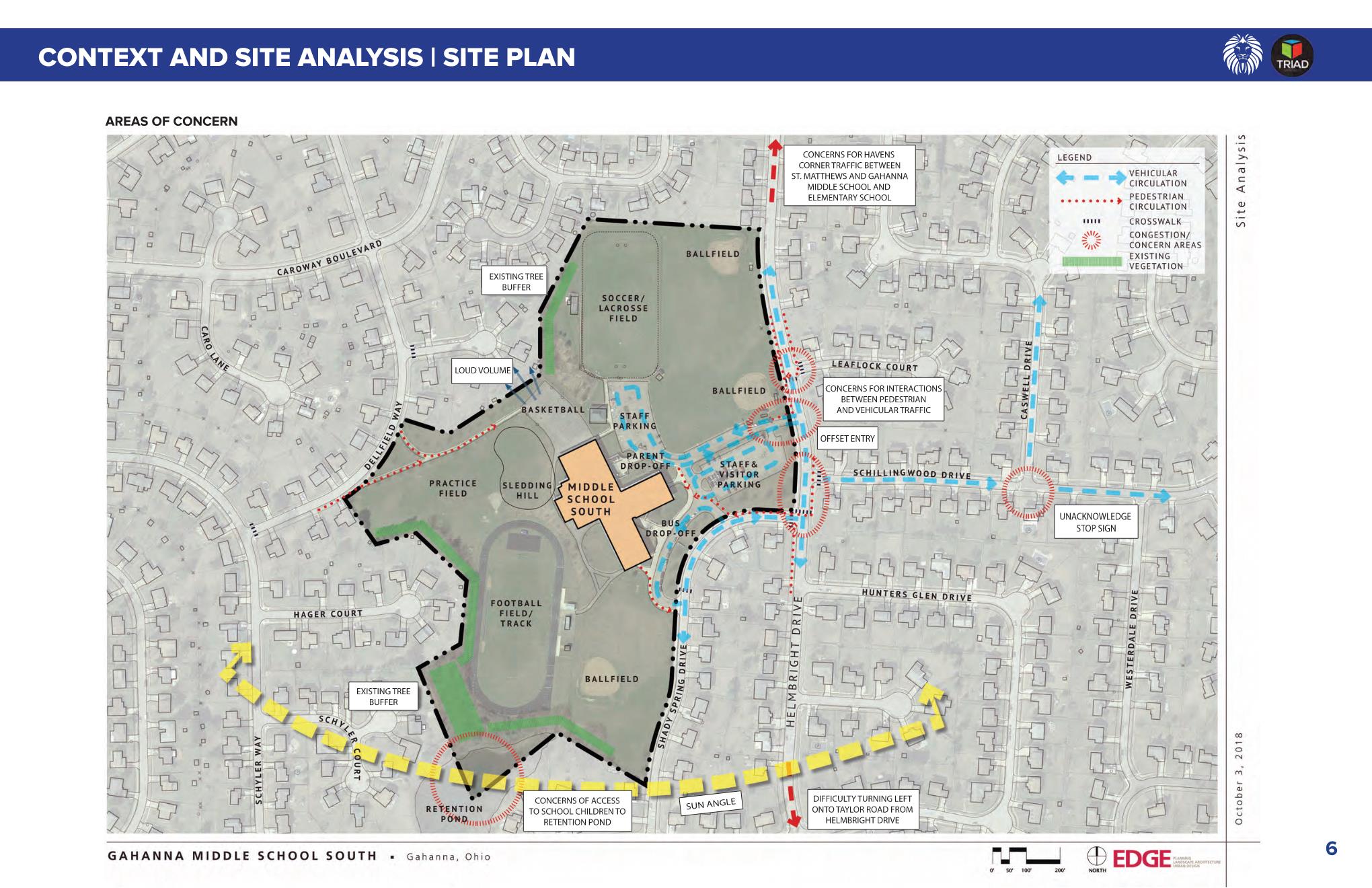
Gahanna-Lincoln Elementary School Site Plan
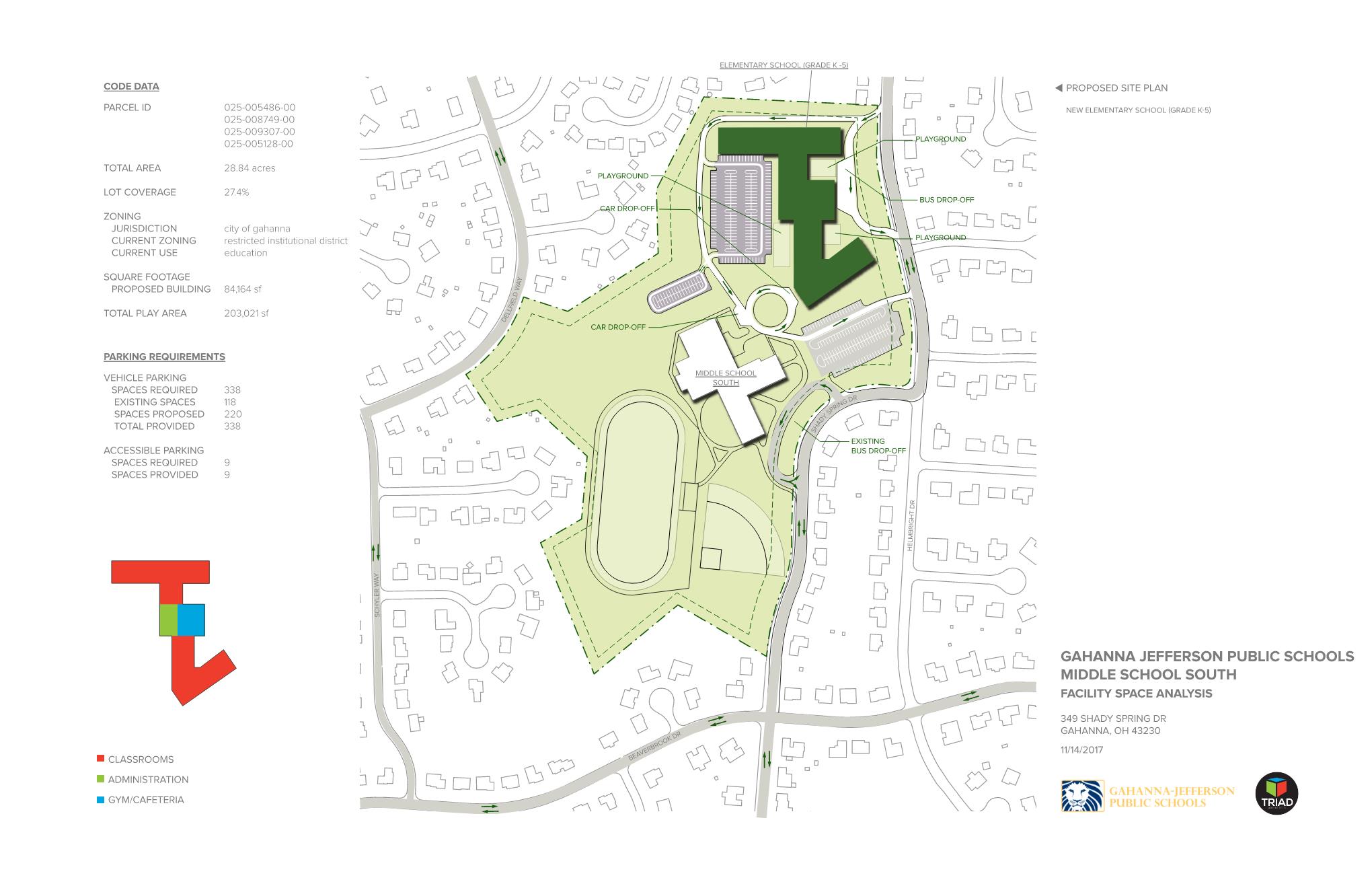
Gahanna Lincoln Elementary School Site Plan
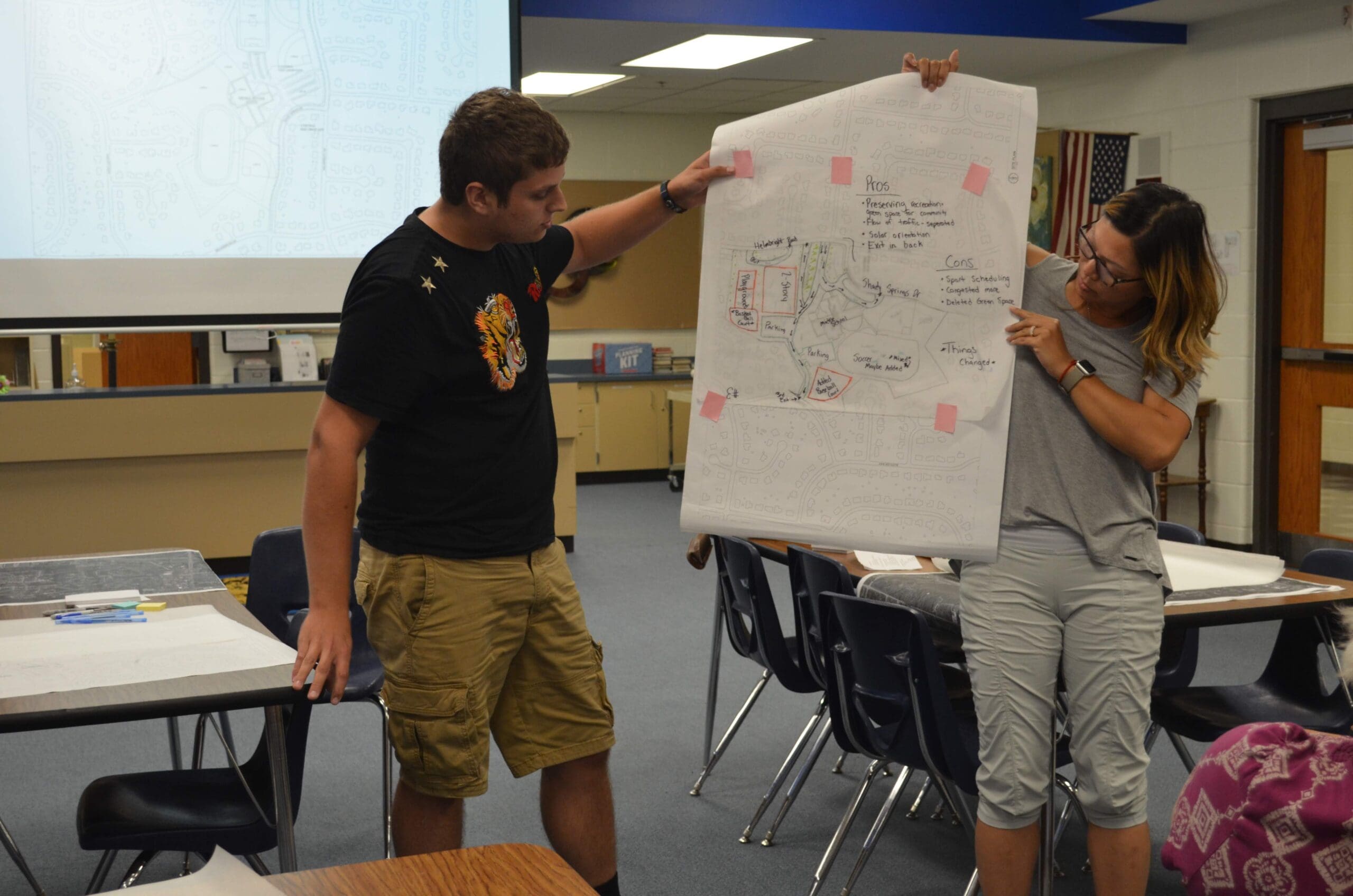
Community Engagement at Gahanna Jefferson Public Schools about the site plan.
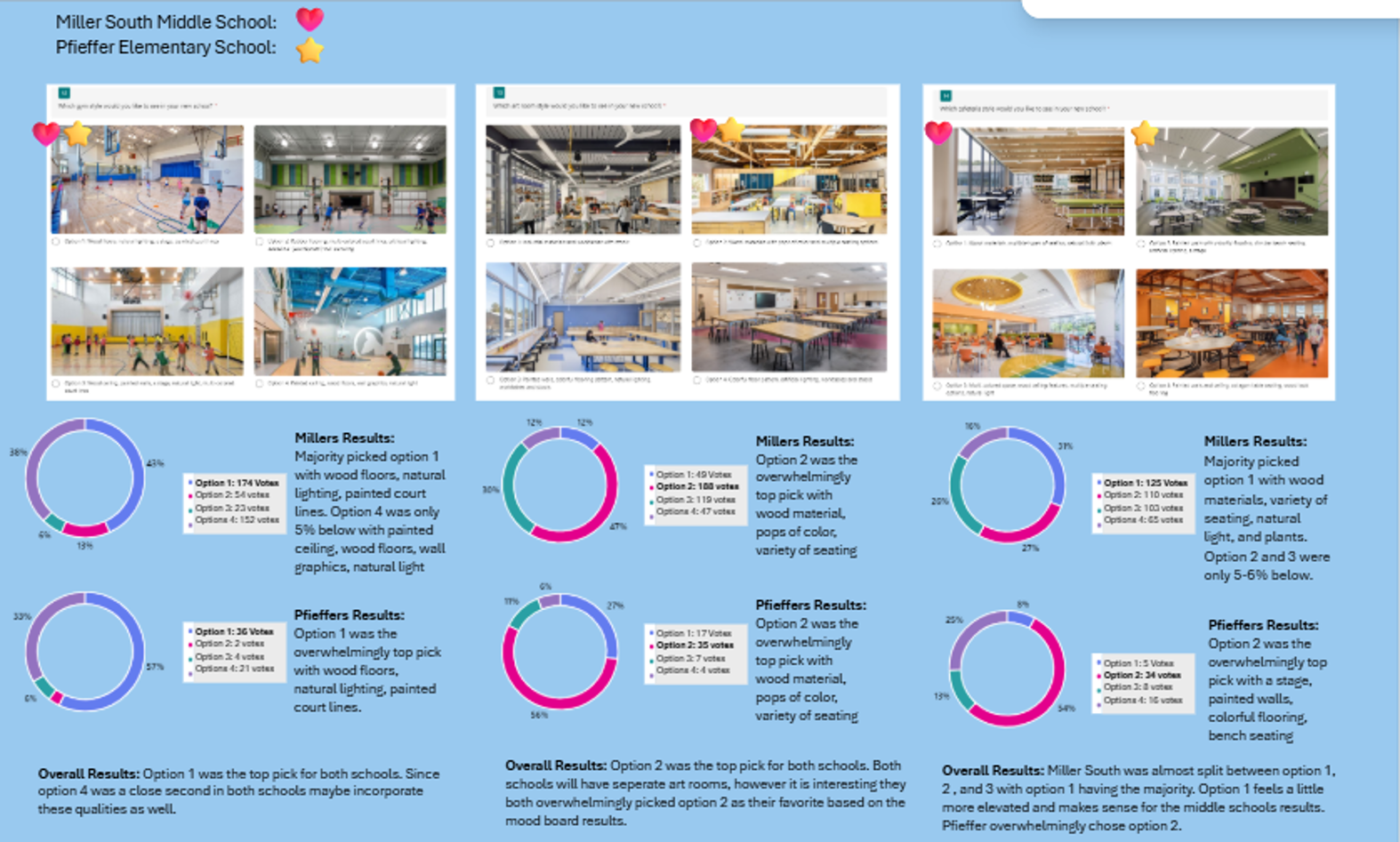
The results of a survey sent to every student with design options for how they wanted their new school to look.
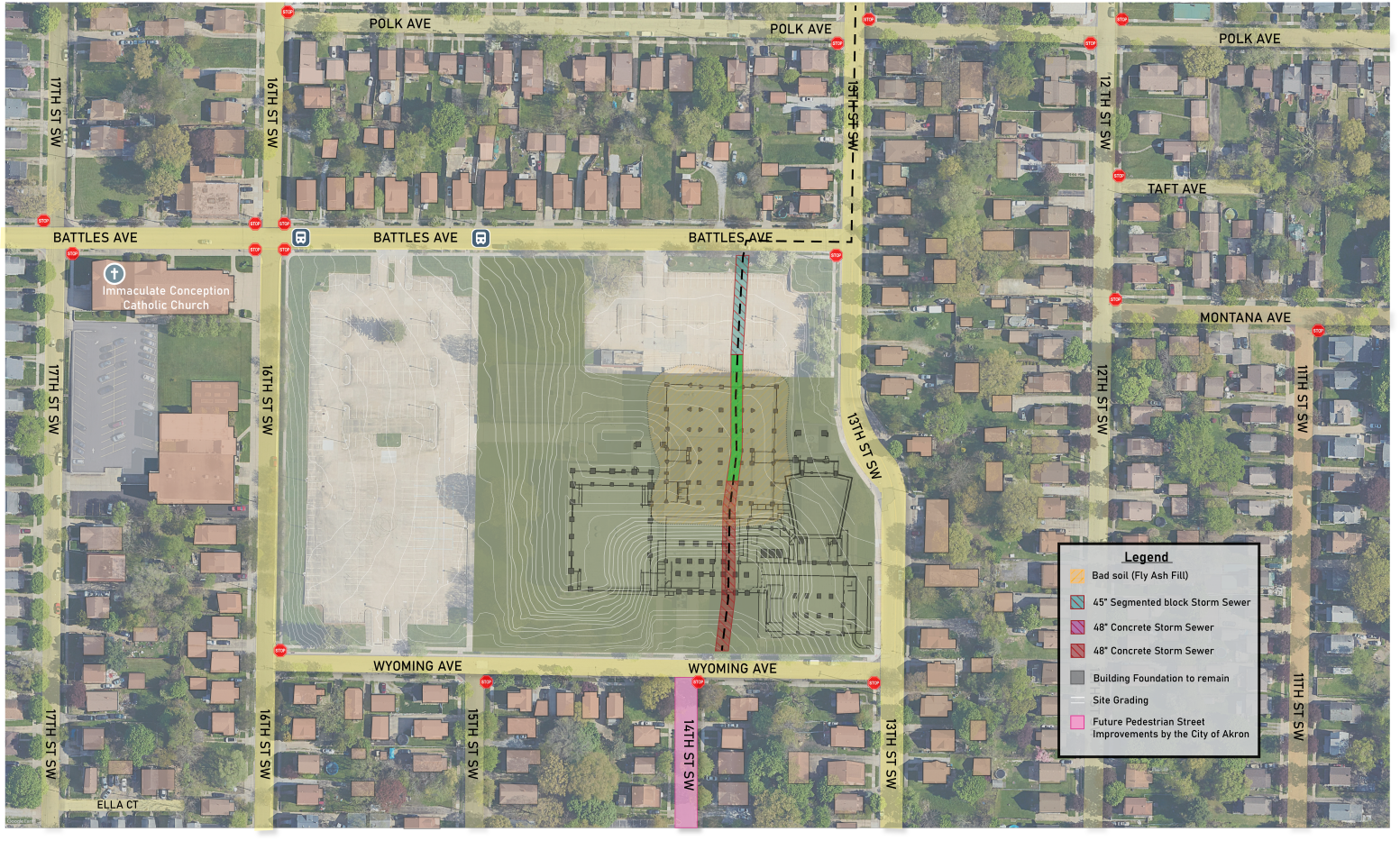
Site plan for the new Kenmore site.
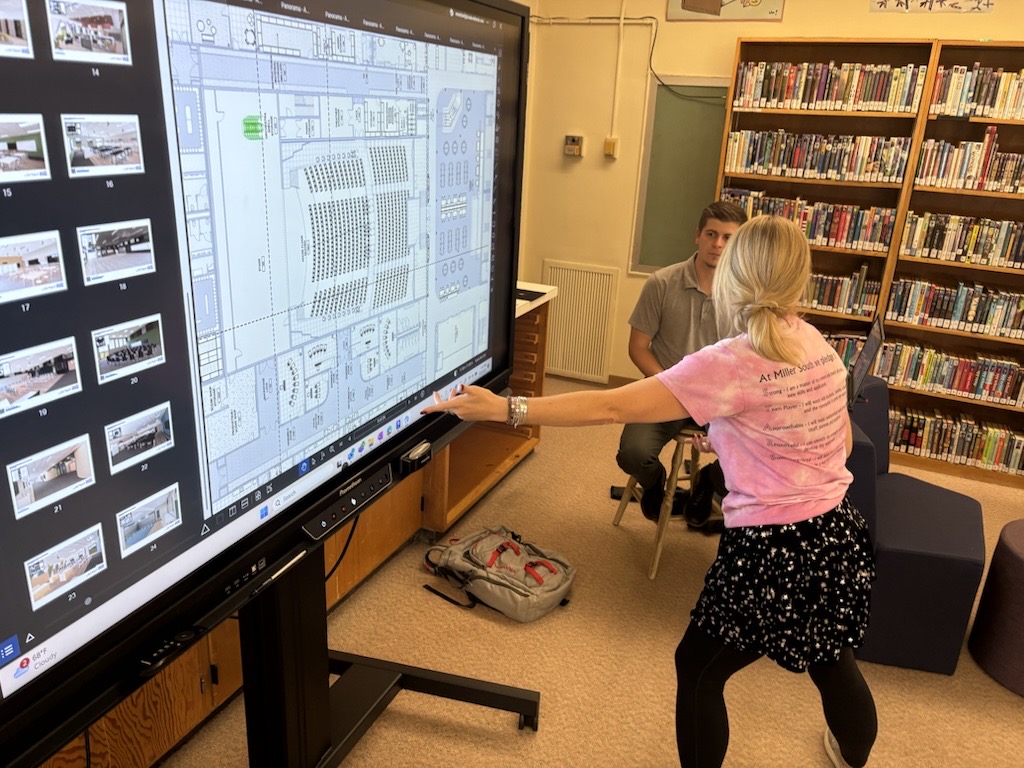
Scenes from our engagement sessions.
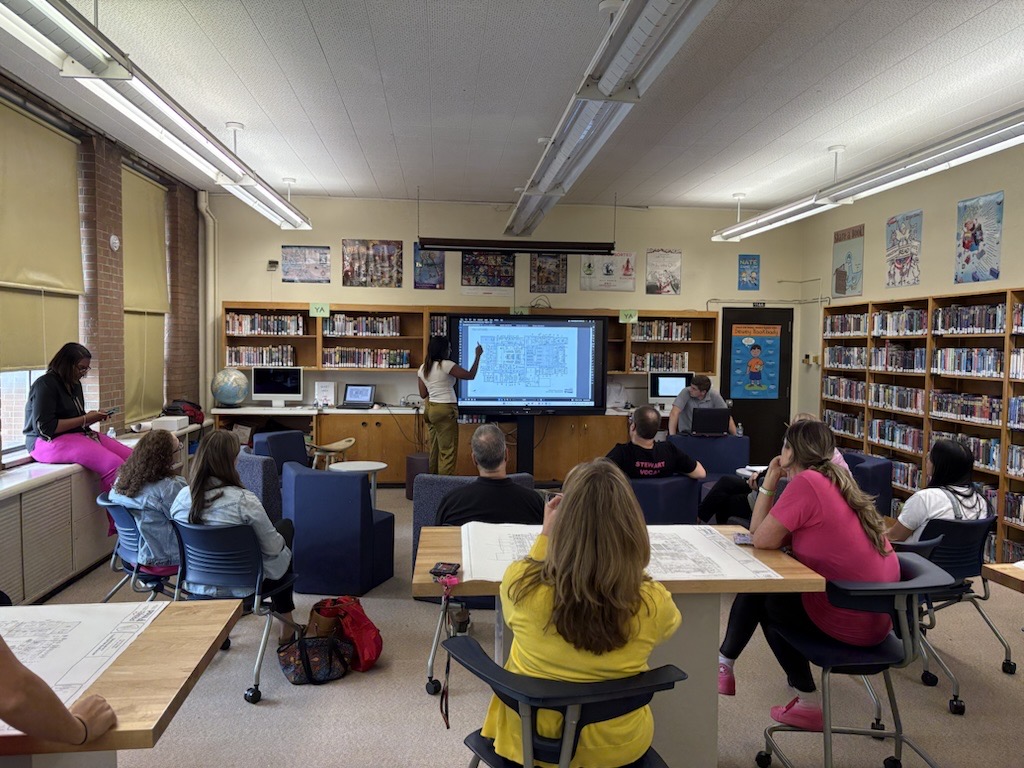
Scenes from our engagement sessions.
From Data to Direction: Creating Actionable Strategies
Data alone doesn’t create progress; interpretation does. Our process focuses on synthesizing information into clear options and decision-ready documentation. Through visual site plans, comparative diagrams, and scenario testing, we help clients understand tradeoffs and make informed choices that create measurable value.
- At Conger Elementary, site analysis revealed a land-locked playground and a parking lot with unsafe access. By evaluating circulation, safety, and program needs, we identified an opportunity to swap the playground and parking locations. This data-driven move created a larger, safer, and more student-centered environment that better served operational needs.
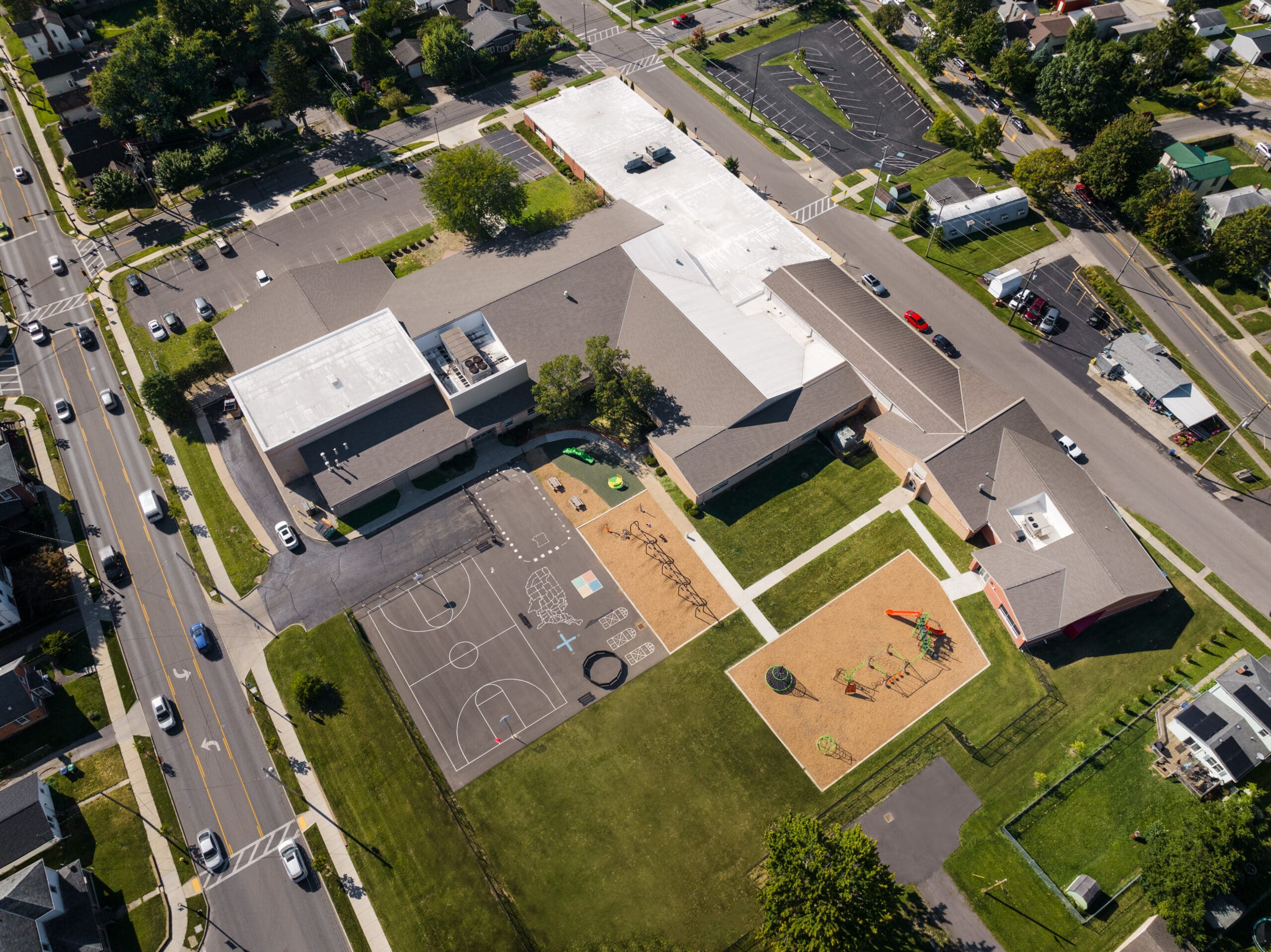
Ariel view of the new site layout of Conger Elementary.
How Data-Driven Planning Optimizes Value
To make the best decisions, leaders must be able to compare the aspirational, operational, schedule, and financial impact of every option. A data-driven process makes this possible.
- When Westerville City Schools contemplated a project at Westerville South High School, we developed plans for renovation, addition, and new construction scenarios. Each plan detailed how it would meet their aspirational vision, capacity needs, schedule, and financial constraints, allowing them to make an informed decision that best served their goals.
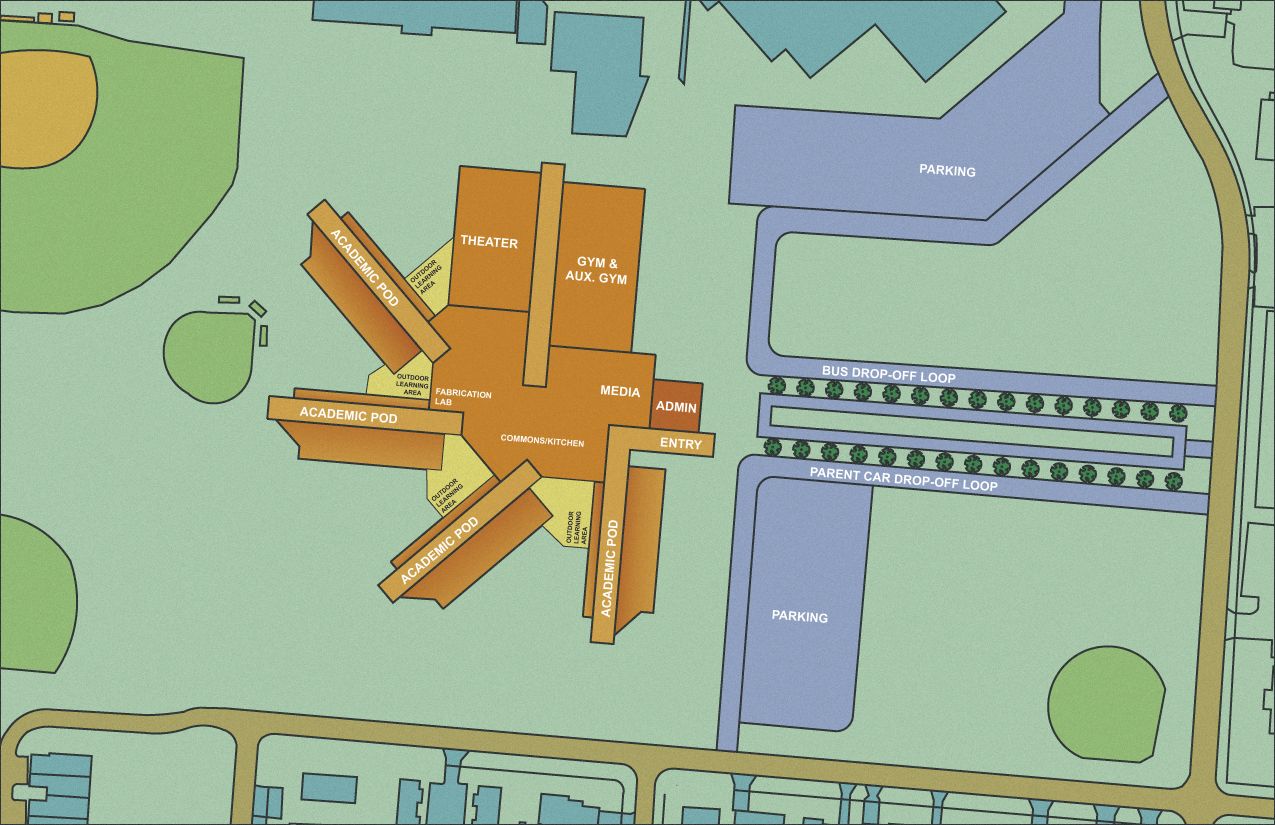
The first site plan for South High School.
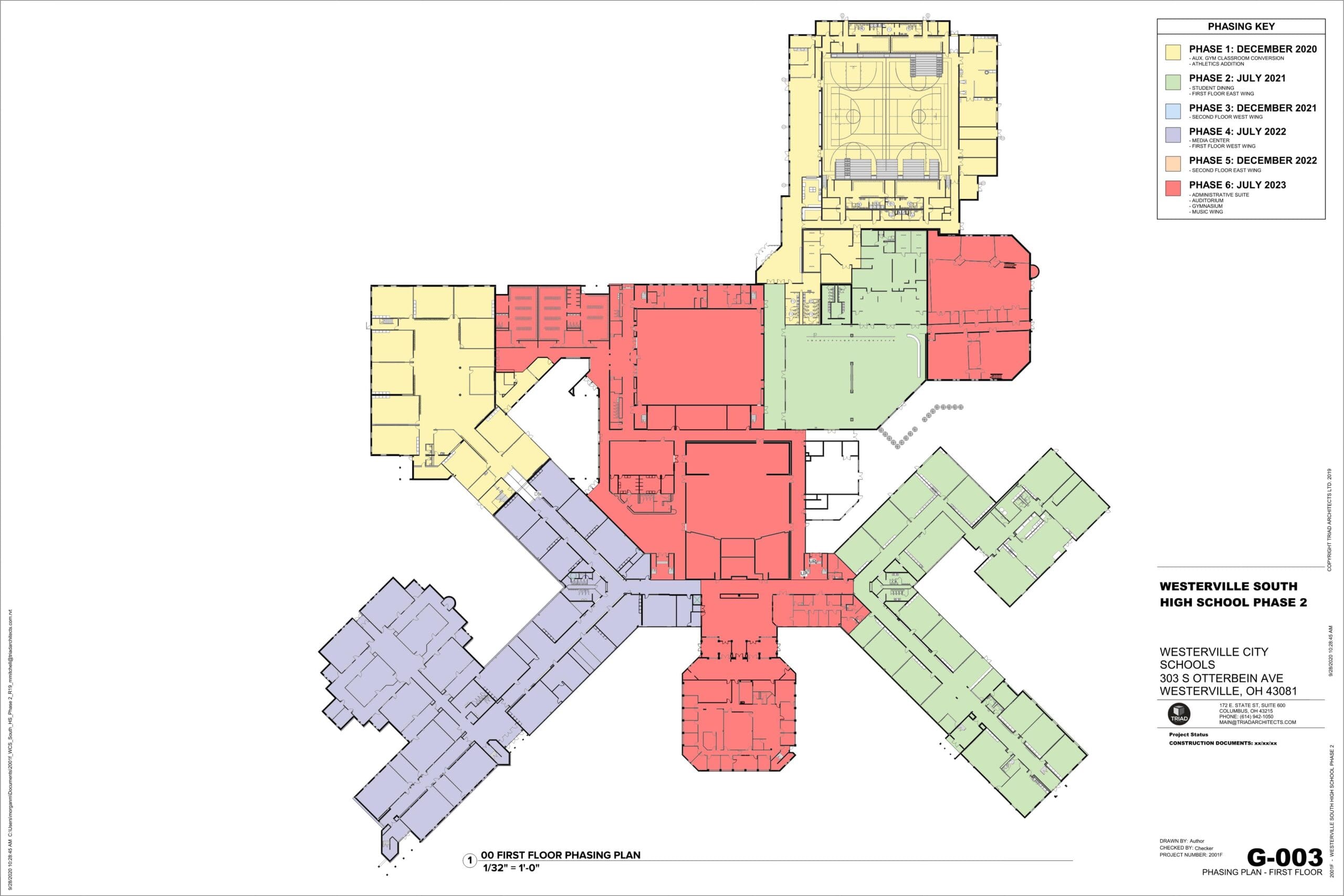
The final site plan for South High School.
- For the Columbus Montessori Education Center, we combined a facility master plan with a capital improvement plan. This resulted in a five-phase strategy that started with essential capital improvements, ensuring that every dollar raised was maximized and no funds were wasted on work that would be undone by a future expansion.
Building Consensus Through a Transparent Process
A key advantage of a data-driven approach is its ability to build trust. By grounding recommendations in documented analysis and community feedback, we help clients navigate complex conversations and secure stakeholder buy-in.
This was especially evident during planning for the St. Charles Preparatory School Convocation Center. The facility was initially slated for a location that raised concerns among residential neighbors. Based on stakeholder feedback, the school relocated the building. Triad then navigated the new site’s complexities—tighter constraints, parking relocation, and a lengthy city approval process—by developing strong relationships with neighbors and officials. This collaborative, data-informed approach created a successful site plan that balanced competing requirements while maintaining the project’s vision.
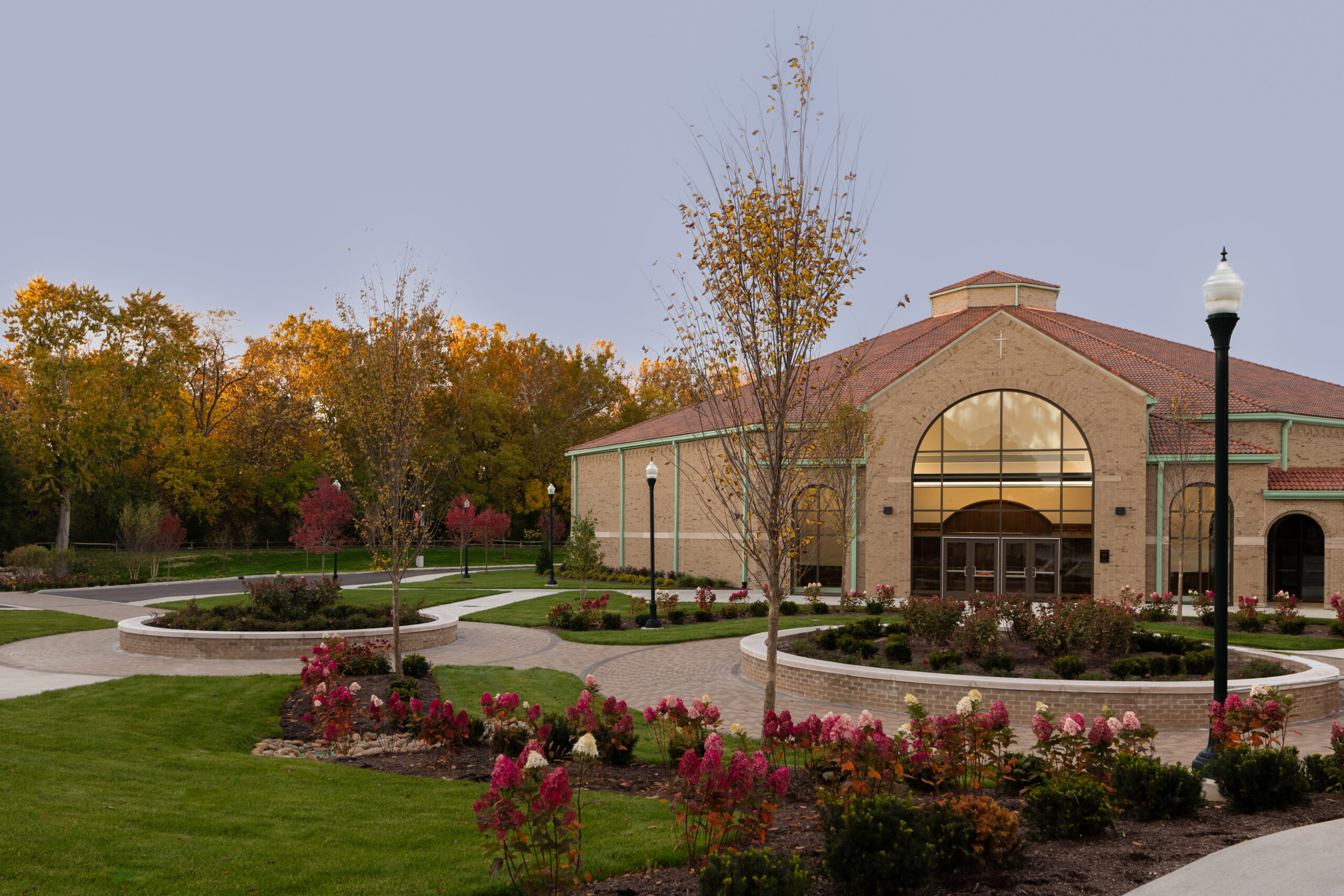
St. Charles Preparatory School

St. Charles Preparatory School
Your Path to Defensible, Actionable Facility Plans
Data-driven planning is about delivering results that are responsive, defensible, and achievable. It empowers leaders to prioritize investments, reduce risk, and build consensus around solutions that reflect both technical realities and stakeholder values. By turning measurable insight into tangible impact, you can move forward with solutions that are positioned for long-term success and supported by all.
