Academic Enrichment Center, Westerville City Schools
At Triad, we work to bring community aspirations to life. We value your vision and strive to build and care for the community you live in and leave for future generations.
-
Project Completion
2011
-
Construction Cost
$375,000
-
Client Contact
Kari Dennis, COO 614.797.5700
The Call: These Students Deserved More Than Modulars
Every district has students who are at risk of slipping away. Westerville City Schools had a program to serve them, an alternative learning model built for students who were not thriving in traditional classrooms. The program was strong. The facility was not. Students were learning in modulars at Westerville North High School. Temporary structures, parked on someone else’s campus, offering the least permanent type of educational space a district can provide. For young people already questioning whether school was worth their time, the message was hard to miss: you do not belong in the main building. The district’s leadership decided that was unacceptable.
Choosing a Partner Who Designs for the Student, Not the Building
The district identified a former office building as the new home for the program. But converting an office building into an alternative learning center was not a standard renovation. The finished space needed to serve a unique educational model and, more importantly, needed to change how students felt the moment they walked in. These students had spent their time in modulars. They already knew what it felt like to be housed in a space that was not designed for them. The district needed a team that understood how design shapes behavior and self-perception. They chose Triad.
The Decisions That Changed What Students See When They Walk In
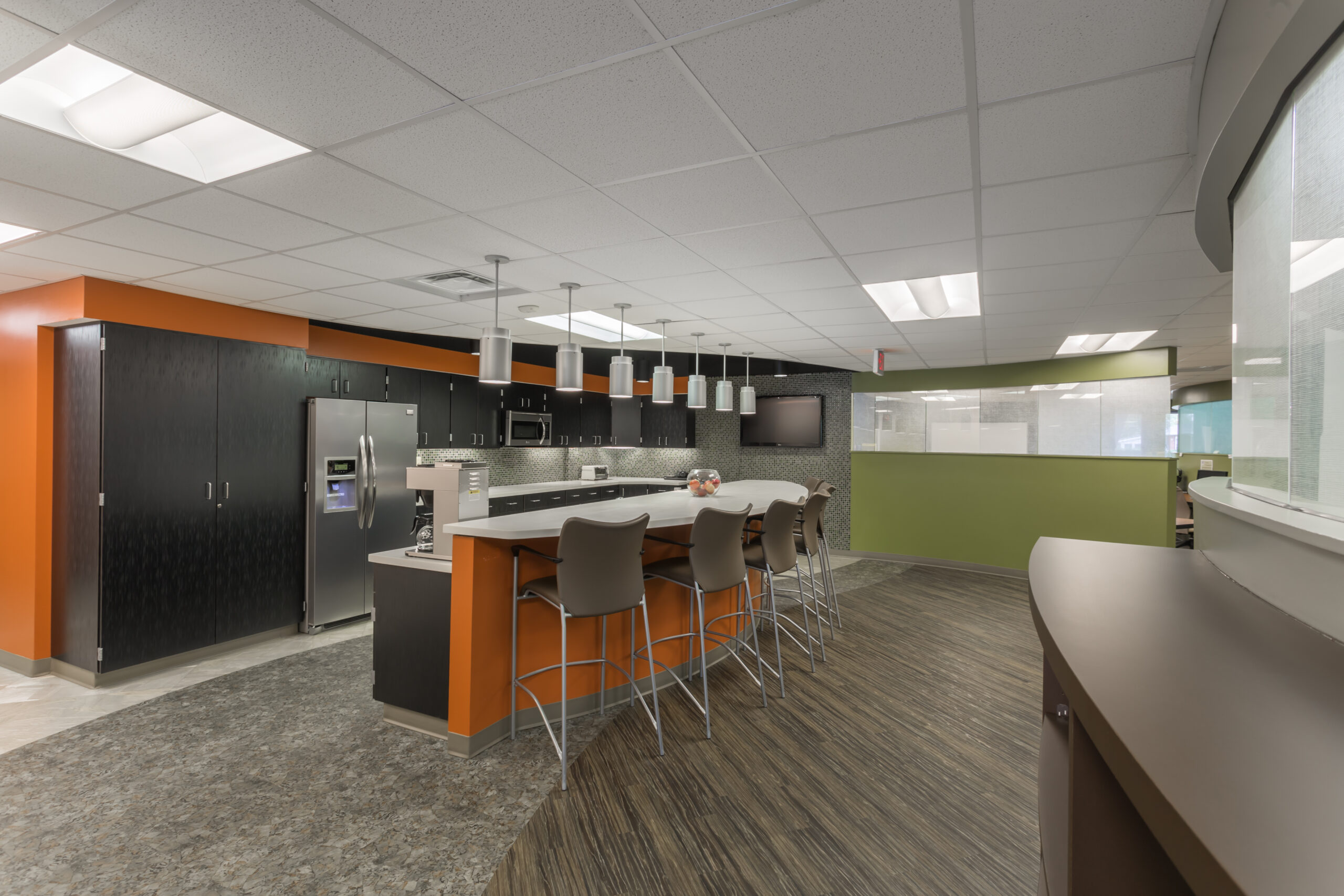
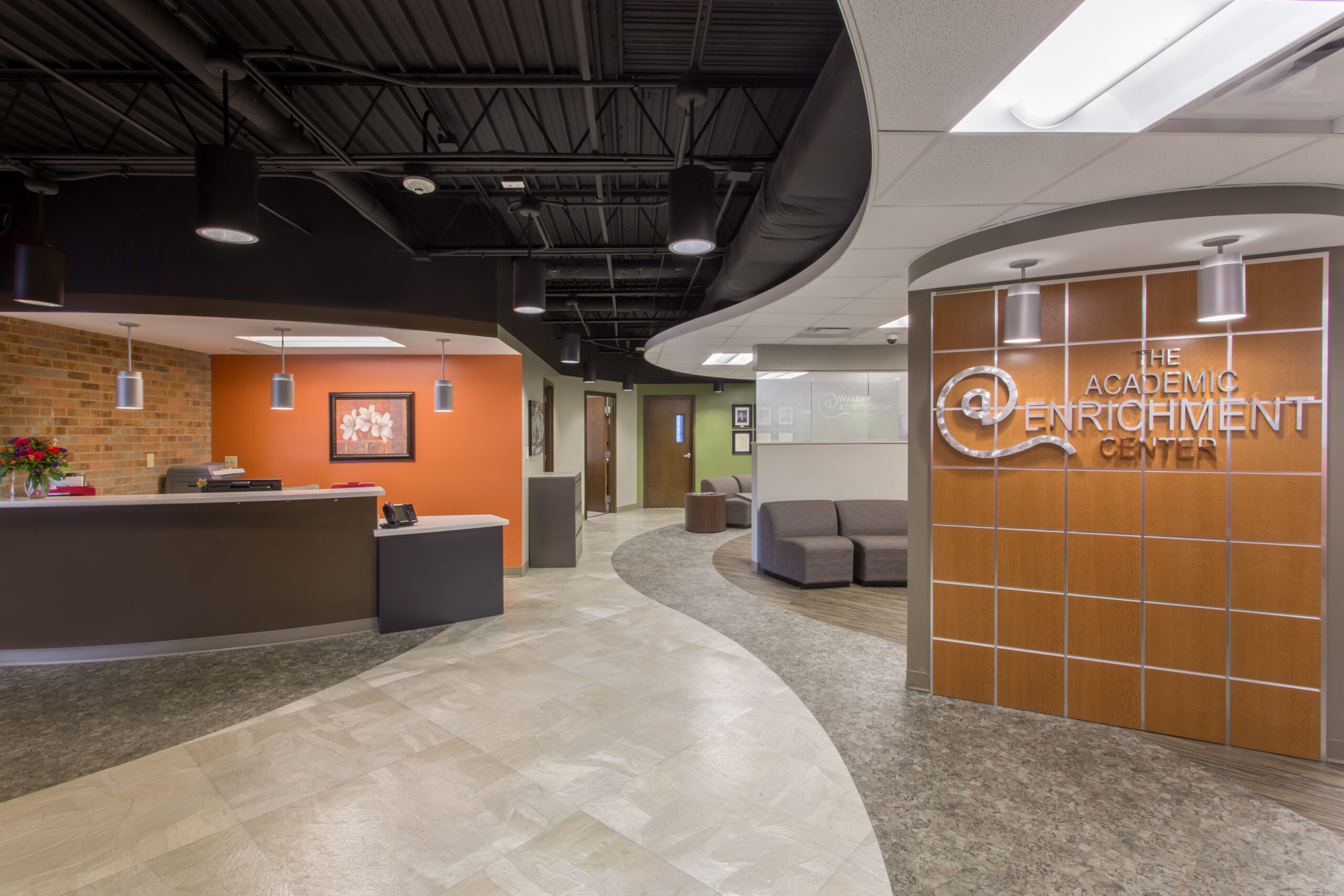
The district’s first decision set the direction for the entire project: the space would be designed to look and feel like a professional work environment, not a traditional classroom or a dressed-up office. The goal was to show at-risk students, many of whom had never set foot in a professional workplace, what their future could look like. That vision guided every material selection, every layout decision, and every conversation with stakeholders.
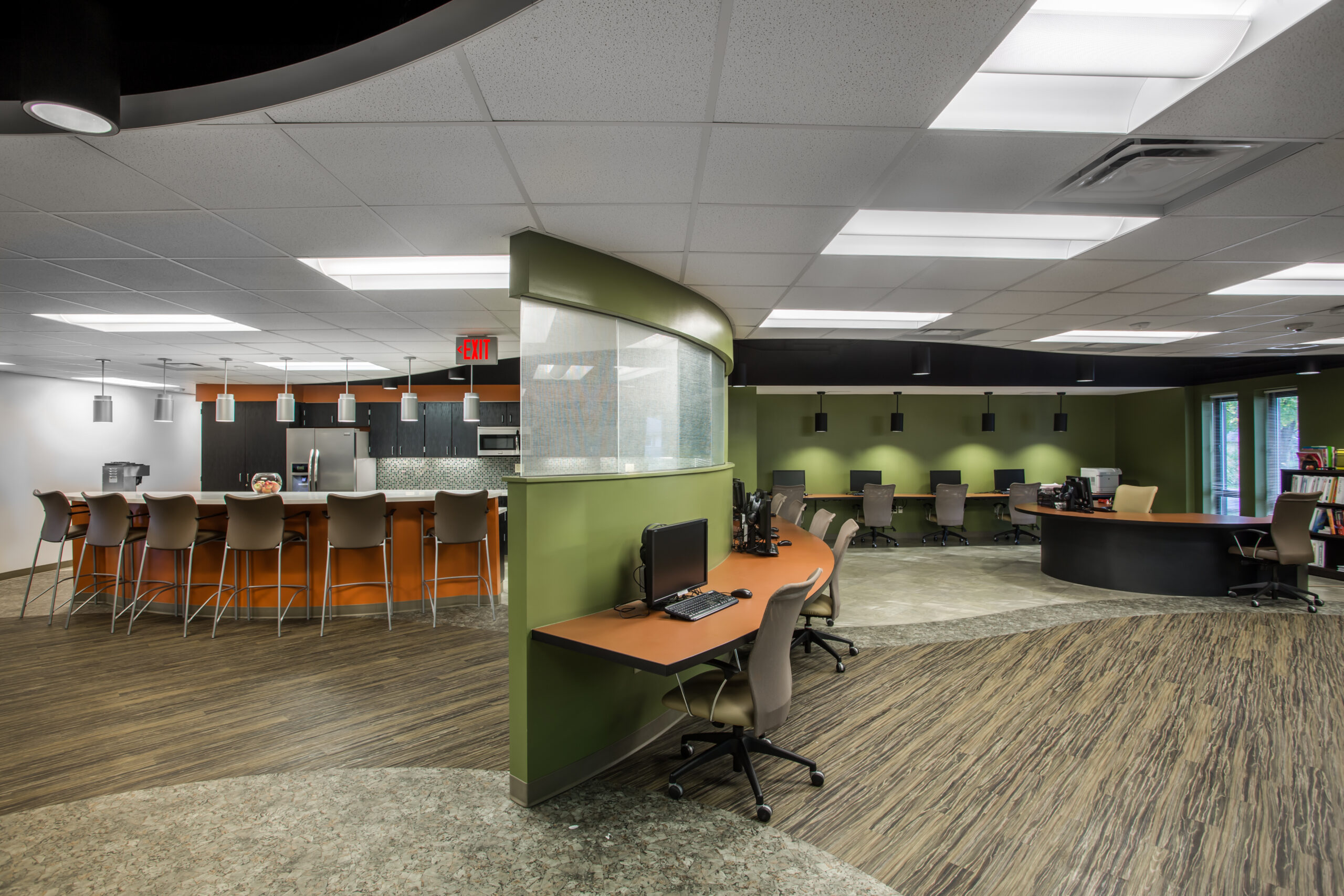
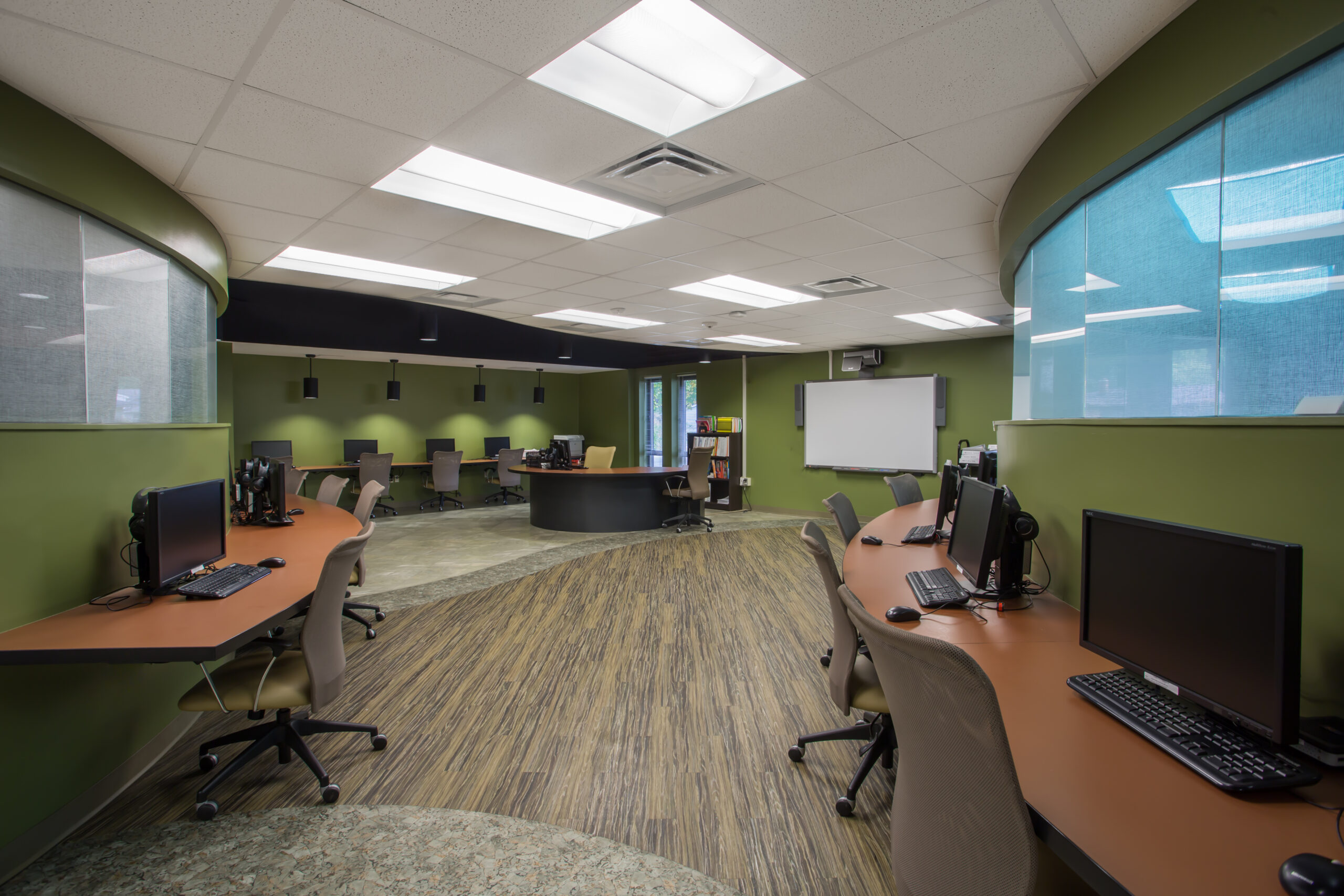
The program’s structure created a specific design challenge. Students needed to do self-directed online work and participate in small group instruction, sometimes in the same period. The district chose to solve both needs in a single space: a circular classroom designed so that individual workstations line the perimeter while the center serves small group collaboration. Both modes of learning happen simultaneously without one disrupting the other. Triad’s architecture and interior design team engineered the layout, furniture plan, and acoustics to make it work.
Behind the design decisions, the district managed the practical challenges of converting an office building. Building code requirements for the change of use. Unforeseen conditions that threatened the budget. A construction timeline that could not disrupt district operations. At every step, the district’s leadership made the tough calls, with Triad’s process providing the protections and the options to make those decisions with confidence.
From Modulars to a Facility That Says: You Belong Here
Today, Westerville’s at-risk students walk into a dedicated facility that was designed specifically for them. Not a modular. Not someone else’s campus. Not a repurposed office with smaller desks. A professional workplace environment with a circular classroom built for how they actually learn. The Academic Enrichment Center is one of the most intentionally designed learning spaces in the district, and it was built for the students who needed it most. The project was delivered on budget with taxpayer dollars. The district’s leadership proved something that matters: the students closest to giving up deserve the most thoughtful investment. They made that case with their actions, and they delivered.