
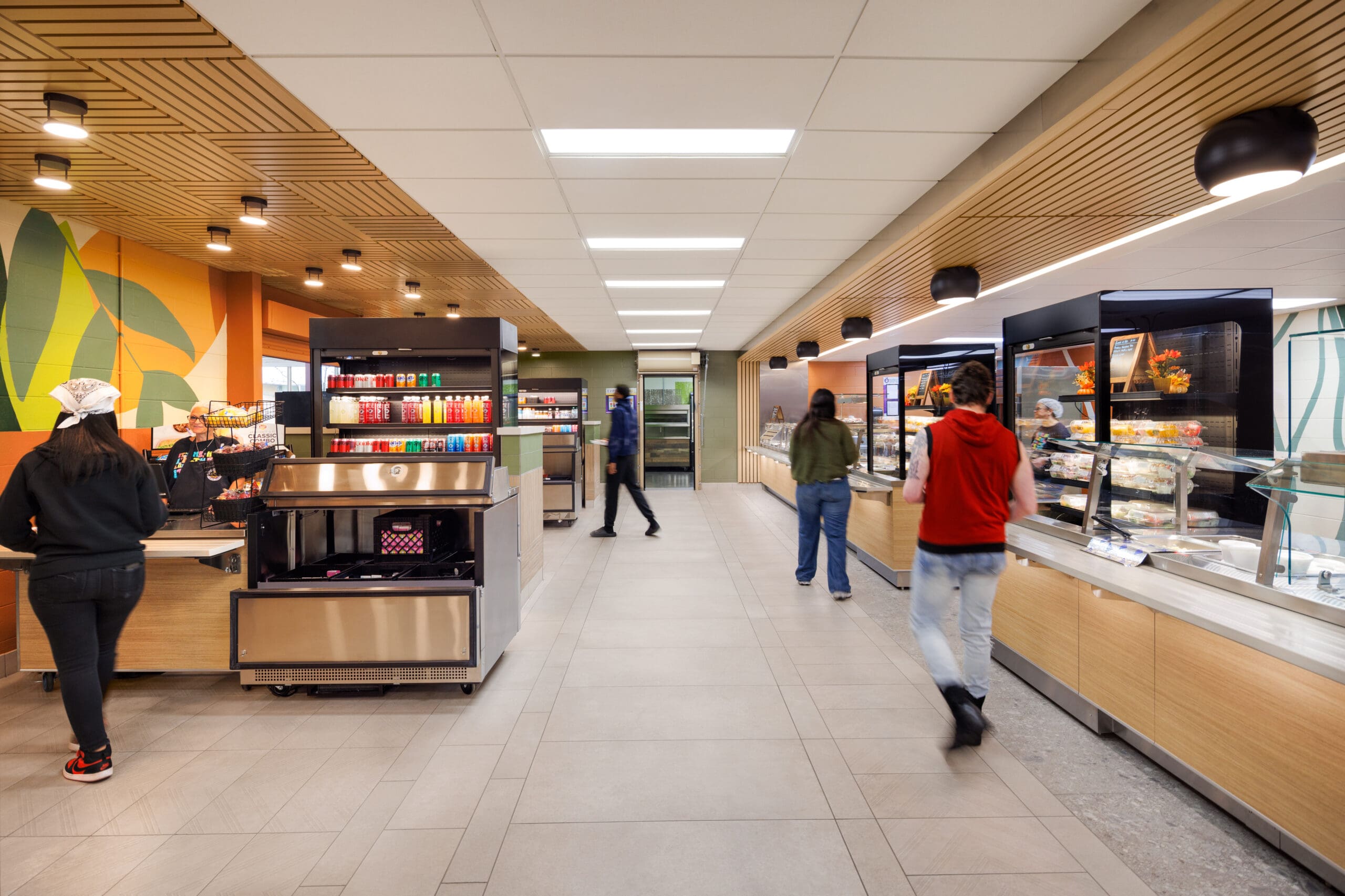
Serving Area Renovation, Reynoldsburg City Schools
At Triad, we work to bring community aspirations to life. We value your vision and strive to build and care for the community you live in and leave for future generations.
-
Cost
$1M
-
Area
1,900 SQ. FT.
The Call: A Cafeteria That Needed to Be More Than a Place to Eat
The cafeteria at Reynoldsburg’s Summit Campus was doing its job, technically. Students could eat there, but the space was dated, the servery was inefficient, and the experience felt institutional. Students came because they had to, not because the space invited them to. The district’s leadership wanted more. They wanted the cafeteria to feel like the kinds of places students choose to spend time in outside of school. They wanted students to walk in and feel like the space was designed for them, not just for serving food efficiently.
Choosing a Partner Who Designs for the Student Experience
A cafeteria renovation can go two ways. It can update the finishes and replace the furniture, producing a space that looks newer but feels the same. Or it can rethink the entire experience, from how students move through the serving stations to how they feel when they sit down. The district wanted the second approach. They needed a partner who would design around the student experience, not just the food service operation.
The Decisions That Transformed How Students Experience Lunch
The district engaged stakeholders to understand how students actually used the cafeteria and how they wanted it to feel. The insights from those conversations, not food service logistics, drove the design. The team looked at the kinds of spaces students gravitate toward outside of school: places that feel relaxed, inviting, and designed for gathering. Those environments became the inspiration for what the cafeteria could become.
The servery was reconfigured to improve the flow for both students and staff. But the redesign was not just about operational efficiency. The way students encounter the food, move through the line, and transition to their seating was rethought as part of the overall experience. The servery became the first impression of the cafeteria, not just a functional area to pass through.
Triad’s integrated interior design team, working with immersive 3D visualization and environmental graphics, designed an environment where the finishes, the furniture, the lighting, the layout, and the graphics all work together. The result is a cafeteria that feels cohesive, inviting, and intentionally designed for the students who use it every day.
Unforeseen conditions in the existing building were managed through protections built into the budget from the start. The design elements that define the student experience were protected throughout the project so that the finished space delivered on the district’s vision.
A Cafeteria That Changed How Students Feel About Lunch
The Summit Campus cafeteria is no longer a space students endure. It is a space they choose. The environment feels like the places students want to be, not the institutional dining halls they are used to. The servery works better for students and staff. The design was shaped by student input and brought to life through integrated interior design, 3D visualization, and environmental graphics. The project was delivered on budget. And the district proved that a cafeteria renovation does not have to settle for a cosmetic update. It can change how students feel about being in the space, every single day.
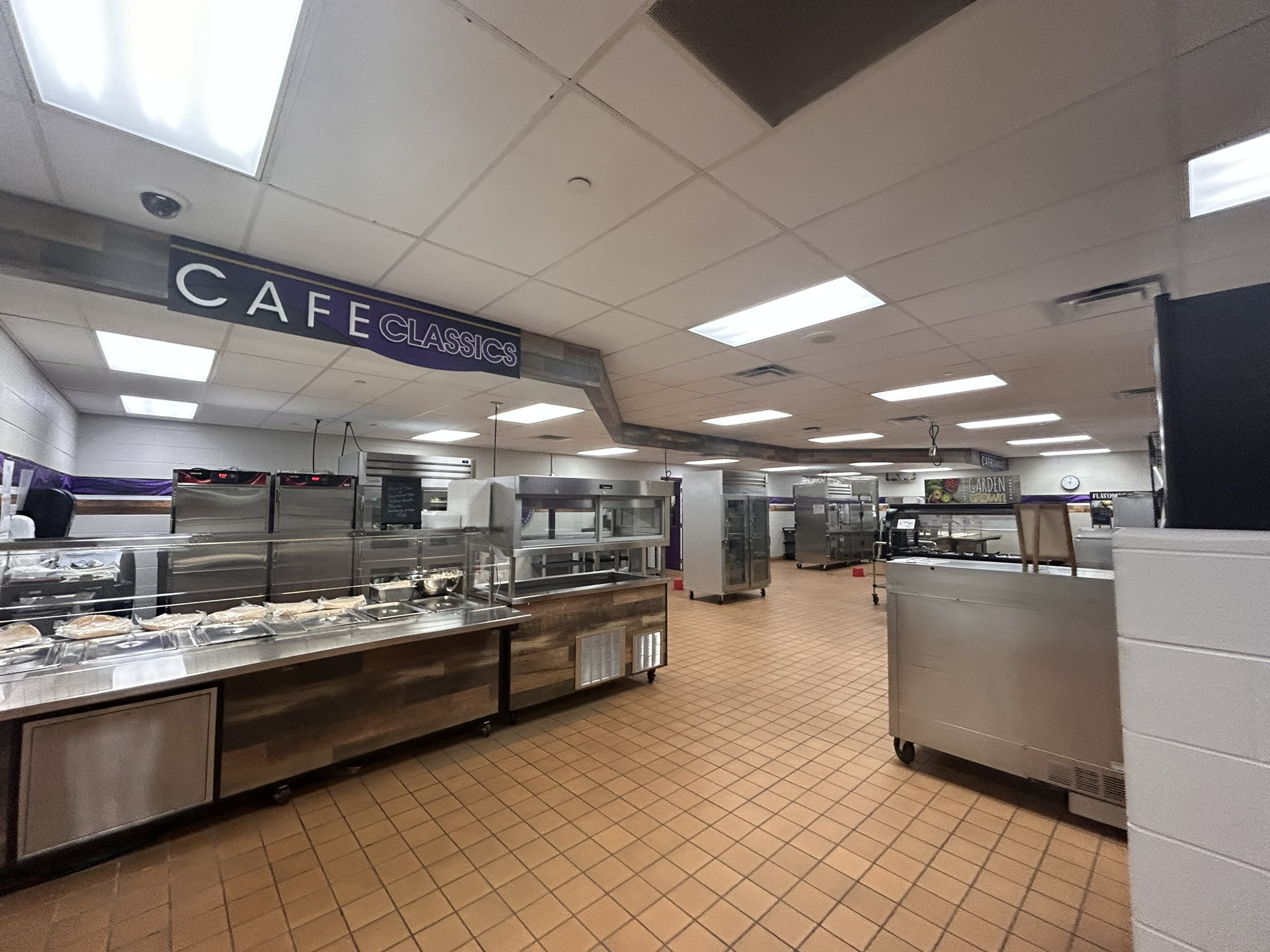
Before

After
