Master Planning Services, Del-Co Water
At Triad, we work to bring community aspirations to life. We value your vision and strive to build and care for the community you live in and leave for future generations.
-
Client Contact
Brian Leach | 740.201.0122
The Call: Building Projects Should Not Drive Campus Decisions
Del-Co Water’s Olentangy campus had been growing for decades. New buildings and expansions were added as the service area grew and the organization’s needs changed. But the utility’s leadership understood that the best building projects are the ones grounded in a planning framework, not just immediate need. Without a long-range capital improvement plan, maintenance decisions are reactive, driven by failures instead of forecasts. Without a land use master plan, new buildings go wherever land is available instead of where they will create the most value. The leadership decided to invest in both.
Choosing a Partner Who Values the Planning as Much as the Building
The planning services are part of a 29-year partnership between Del-Co Water and Triad, with continuity extending further through founder Dave Price’s previous work with Del-Co. That length of partnership means the planning is informed by deep institutional knowledge of the campus, the service area, and the utility’s operational culture. The planning framework is not a standalone deliverable. It is the foundation on which every building project rests.
The Planning Framework That Directs Every Investment
The capital improvement plan operates on a 20-year cycle, updated at the 10-year mark. It gives the utility’s leadership a long-range forecast of what existing infrastructure needs: when systems will reach the end of their useful life, when buildings will need maintenance or replacement, and how to budget proactively for those needs. The 10-year update keeps the plan current as the campus evolves and as conditions change. The result is a utility that forecasts its infrastructure needs instead of discovering them.
The land use master plan evaluates how the remaining land on the Olentangy campus should be used. Rather than allowing new buildings to occupy whatever space was available, the plan identifies where new investment will create the most operational value, the best campus connectivity, and the strongest long-term positioning. The plan also connects campus decisions to total service area analysis, ensuring that what happens on the Olentangy campus is aligned with the utility’s broader infrastructure strategy, including the Marengo regional campus.
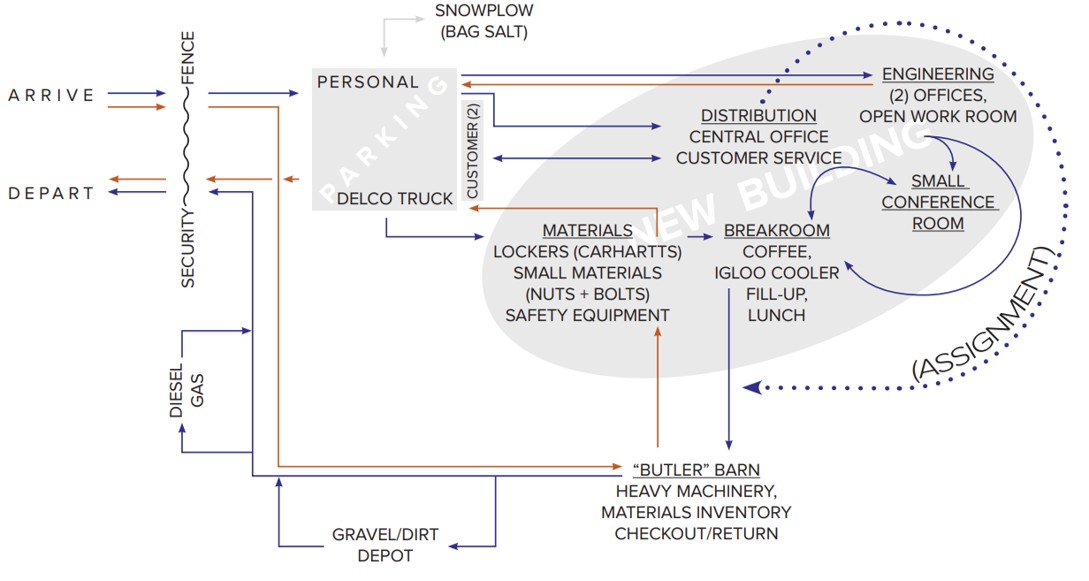
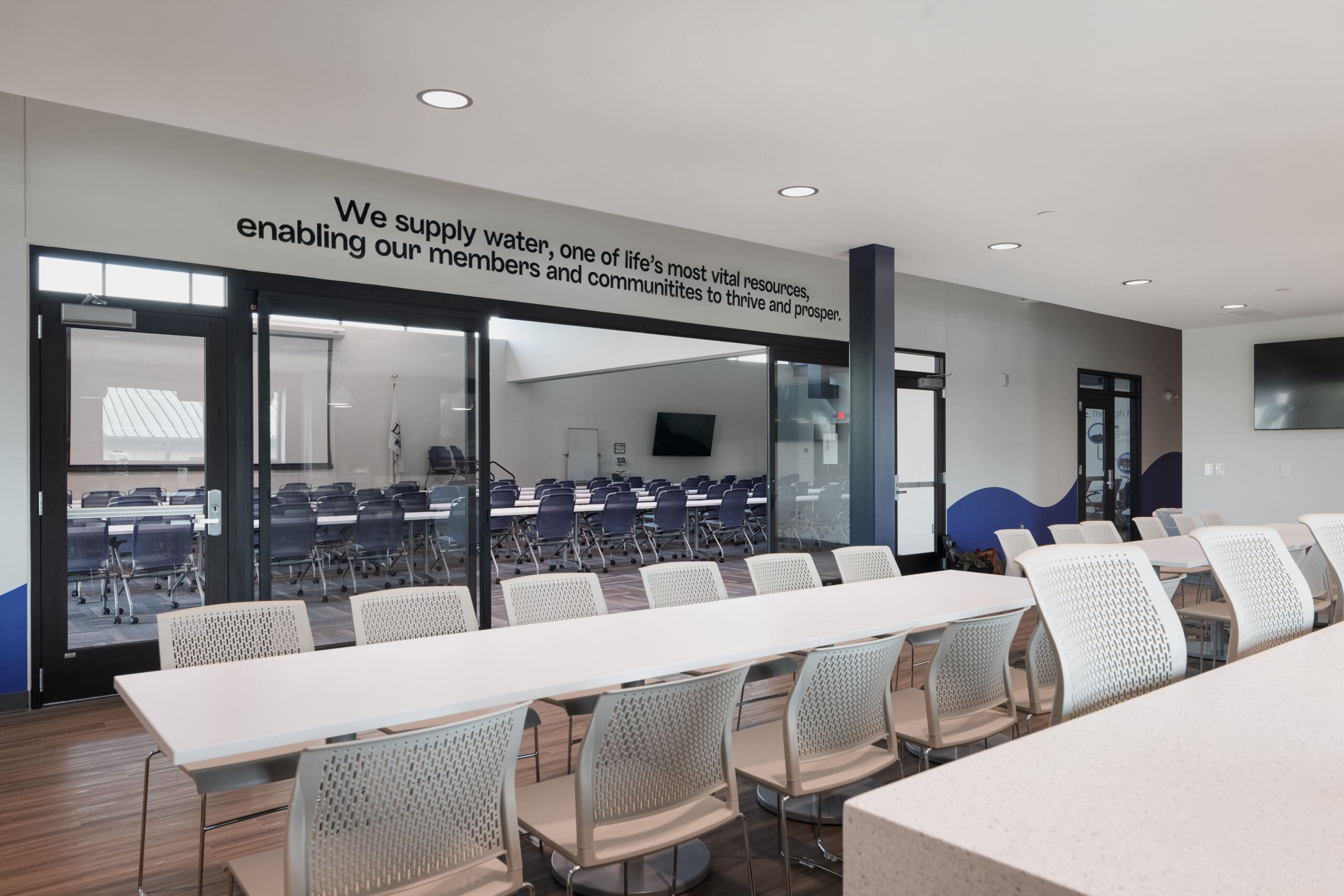
The land use master plan identified a specific gap on the campus: the absence of a centralized hub. The campus had grown over the years with buildings spread across the site, but there was no single gathering point for staff development, team engagement, training, or cross-departmental collaboration. The plan identified the need. The leadership acted on it. The result was the Wolfe Center, which became exactly the centralized hub the plan said the campus was missing.
A Planning Framework That Proves Its Value Every Time a Decision Is Made
Today, Del-Co Water’s planning services are the framework through which every campus decision is evaluated. The capital improvement plan forecasts infrastructure needs 20 years ahead. The land use master plan directs where new investment should go. The Wolfe Center exists because the plan identified the gap. Every building project on the campus is grounded in data, connected to the total service area strategy, and aligned with the utility’s long-term interests. The leadership invests in planning because they have seen what it produces: better buildings, better budgets, and a campus that works as a cohesive whole because every decision is connected to the framework.