Center for Inspiration, Westerville City Schools
At Triad, we work to bring community aspirations to life. We value your vision and strive to build and care for the community you live in and leave for future generations.
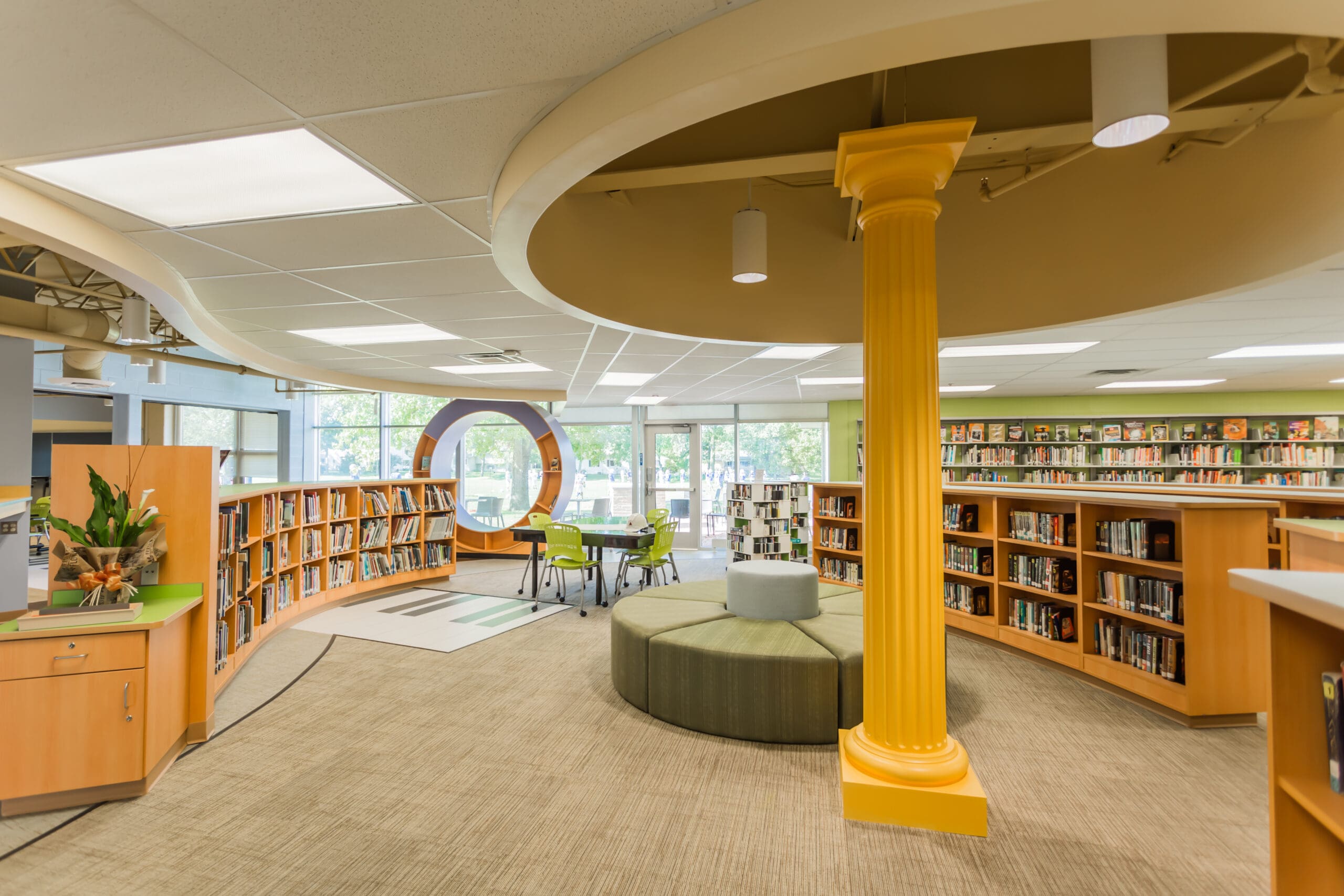
The Call: A Media Center That Students Were Walking Past
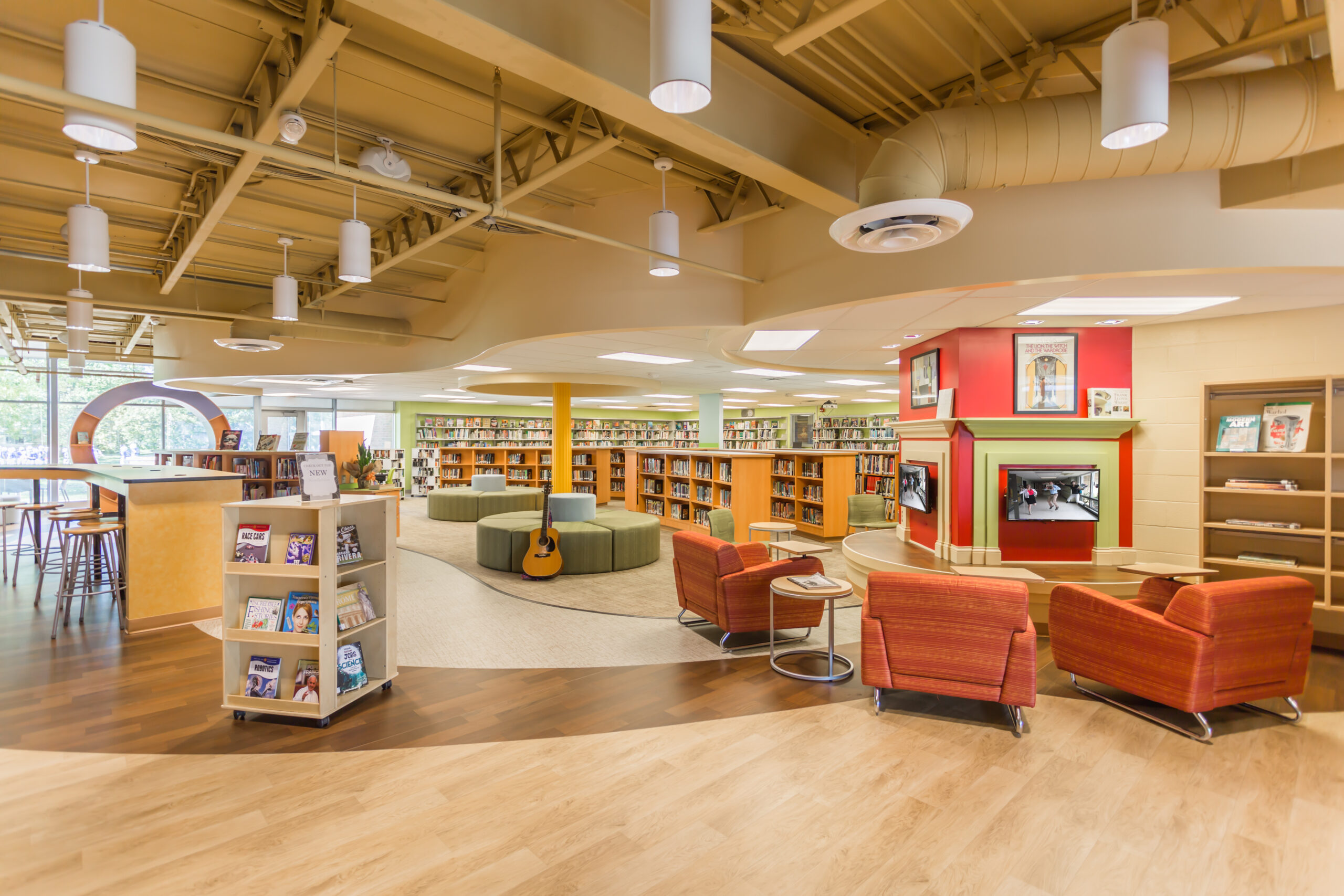
The media center at one of Westerville’s middle schools had a problem that had nothing to do with maintenance or condition. Students simply were not using it. The space was designed around a single purpose, housing books, and that purpose no longer matched how students engage with media, information, and creativity. The district’s leadership recognized that the issue was not the room. It was the idea behind the room. They decided to start over, not with a cosmetic refresh, but with a fundamentally different concept. They would transform the media center into a space for all forms of media and creative expression. And they gave it a name that raised the bar: the Center for Inspiration.
Choosing a Partner Who Designs for How Students Actually Behave
Changing a room is easy. Changing how students choose to use a room is a design challenge. The district needed a partner who understood that the renovation had to be driven by student behavior, not just aesthetics. If the design did not fundamentally change the experience of being in the space, usage would not change either. The district chose Triad.
The Decisions That Turned an Empty Room Into the Most Popular Space in the School
The district’s leadership and stakeholders started by redefining what the space should offer. The Center for Inspiration would not just be for books. It would be for literature, music, art, hands-on making, and digital creation. Every form of media a student might engage with would have a home in this room. Triad facilitated the stakeholder engagement process. The district set the ambition.
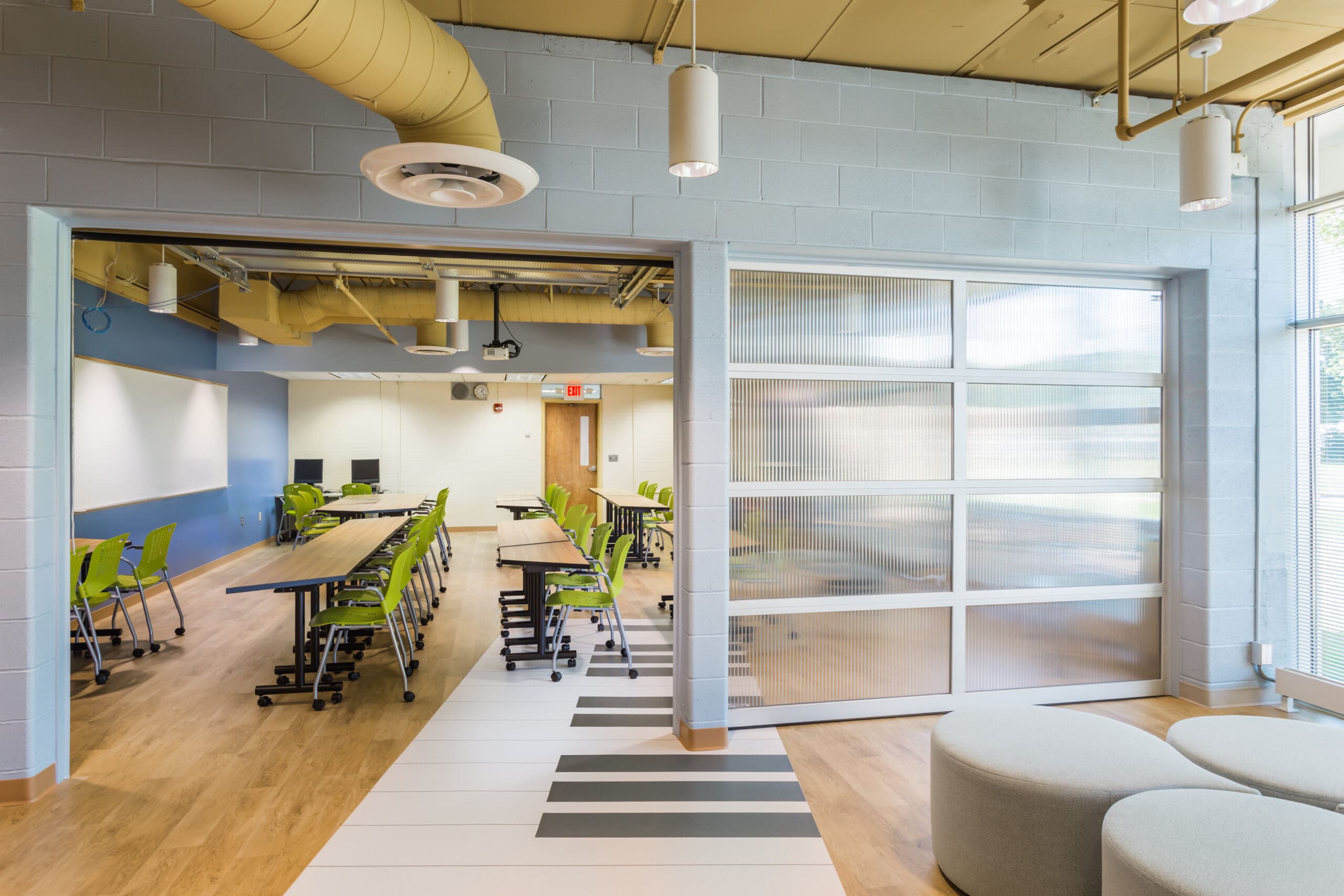
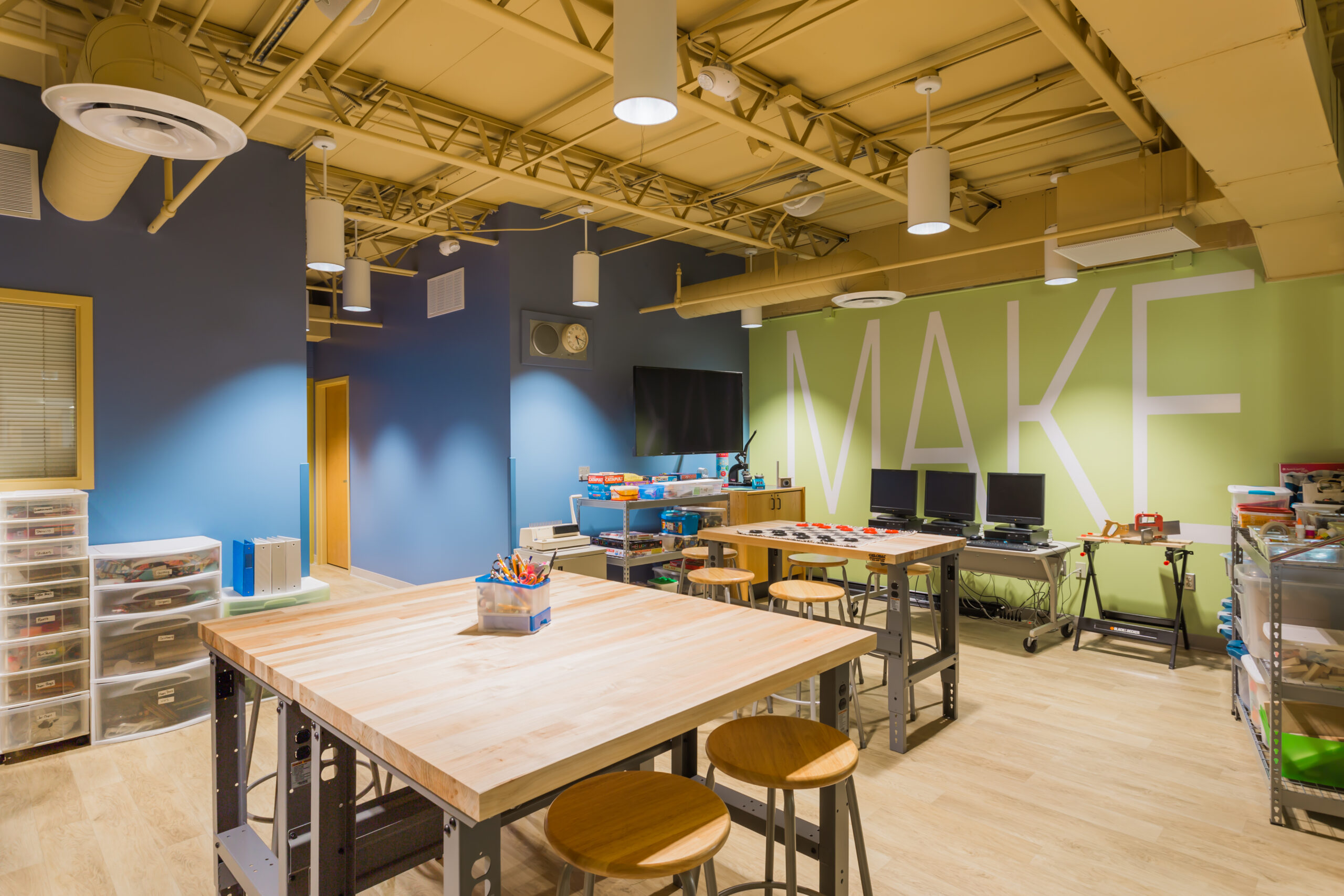
Translating that expanded concept into the existing footprint required specific, purpose-built zones. The district chose to include a tinker space where students could build and experiment with physical materials, and a recording studio where they could produce digital content. These were not decorative additions. They were the features most likely to draw students into the space. Triad’s integrated architecture and interior design team designed each zone to support its intended use while maintaining a cohesive overall environment that felt welcoming and energizing.
Behind the concept work, the district managed the practical challenges. Unforeseen conditions in the existing building required careful budget management. The school had to remain operational throughout construction. Every dollar was public money that had to be justified. The district made prioritization decisions at each phase, with Triad’s process ensuring that the elements most critical to driving student usage, the tinker space, the recording studio, the overall energy of the room, were never compromised.
Usage Skyrocketed: The Design Changed Student Behavior
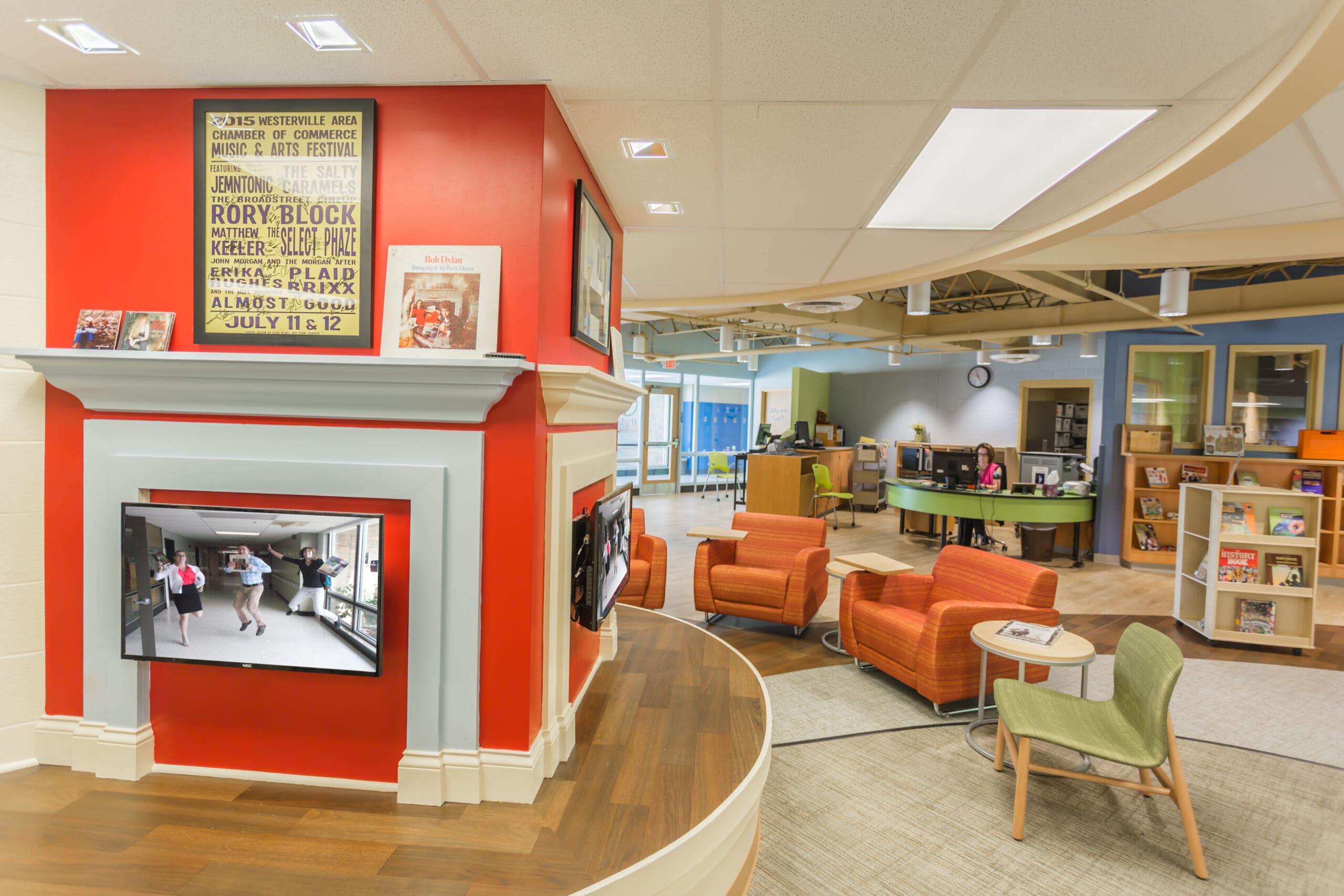
Today, the Center for Inspiration is one of the most popular spaces in the school. Usage skyrocketed after the renovation. Students who used to walk past the old media center now choose to spend their time there. They read, they make music, they create art, they tinker with physical projects, and they record digital content. The space serves all forms of media and creative expression, and it does so in an environment that feels intentional and inviting. The project was delivered on budget, without interrupting school operations. The district’s leadership named it the Center for Inspiration and delivered a space that earns that name every day. They proved that the right design does not just update a room. It changes how students choose to use it.