
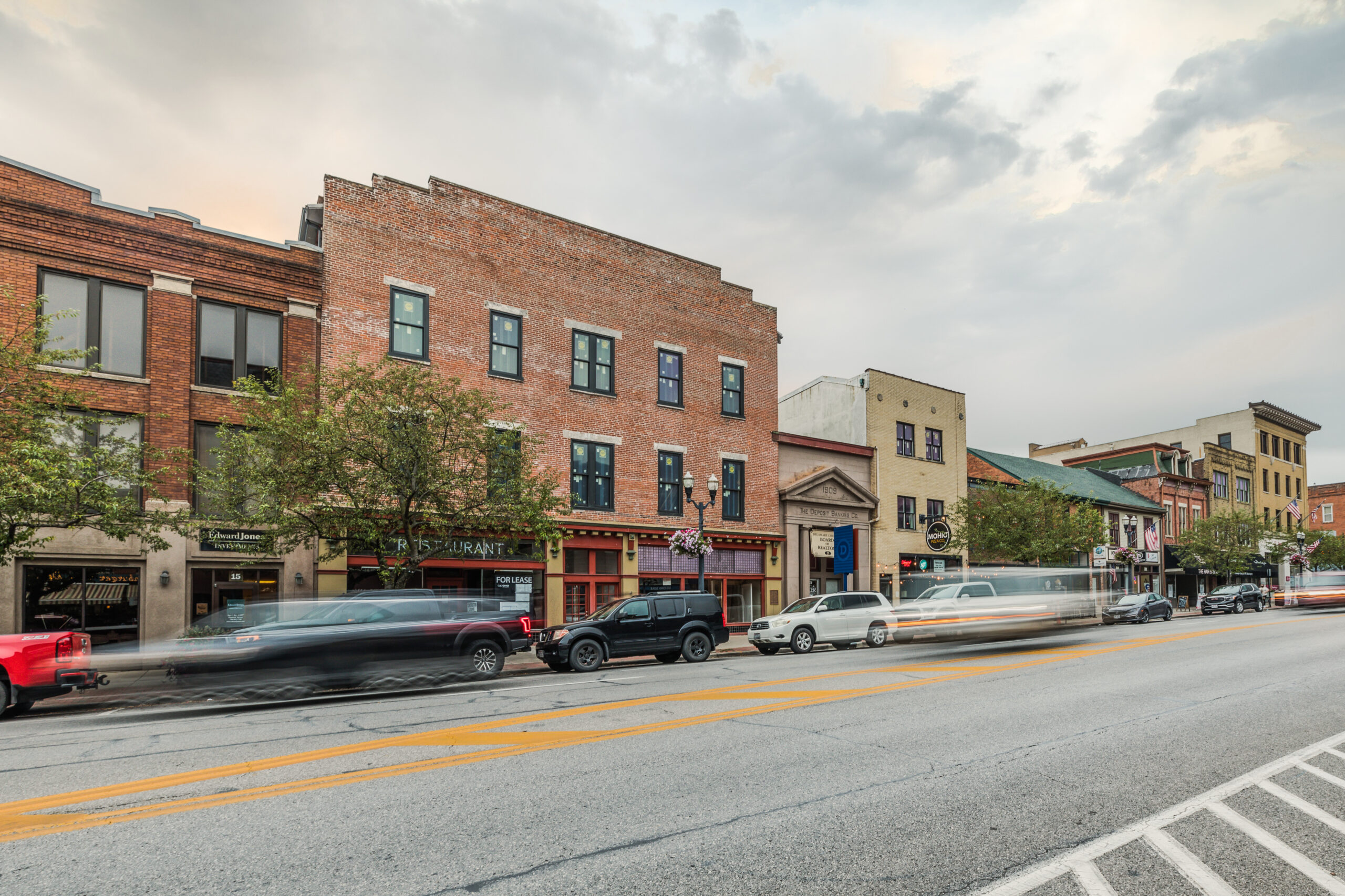
17 N Sandusky
At Triad, we work to bring community aspirations to life. We value your vision and strive to build and care for the community you live in and leave for future generations.
-
Project Completion
2021
-
Construction Cost
$1.3 Million
-
Client Contact
Clyde Henry | 614.354.9630
The Call: A Community Worth Investing In, a Building Worth Saving
Triad had been a partner to Delaware City Schools for over a decade. Through that relationship, the team had watched downtown Delaware build real momentum. The corridor was thriving. Businesses were investing. The community was proud of what they were building. But a historic building at 17 N Sandusky was not keeping pace. It sat underused, its potential locked behind a wall of regulatory complexity that would discourage most developers. Triad saw the building, understood the risk, and made a choice that went beyond business: they would develop it themselves. Not because it was easy, but because a community they had already committed to deserved a partner willing to put their own resources on the line to help protect the momentum.
Both Hero and Guide: Why This Project Is Different
On every other project in this portfolio, Triad is the guide: the partner who walks beside the client and helps them navigate complexity. On this project, Triad was also the hero: the developer who took the risk, spent the money, and bore the consequences. Both roles applied at the same time. Triad brought 29 years of architectural, regulatory, and development expertise to the project: building code navigation, historic review board approvals, SHPO compliance, financial modeling, construction loan monitoring, entitlement processing, and owner’s representation. Every tool in the toolkit was applied firsthand.
But the lasting impact of this project goes beyond the building. When you spend your own money on a development, you learn something you cannot learn any other way: how to be strategic with every dollar. That perspective now informs every conversation Triad has with building owners and developers. The advice is not theoretical. It comes from having sat in the owner’s chair and made the same decisions with personal resources on the line.
Navigating Three Regulatory Bodies That Did Not Always Agree
The project sat at the intersection of three regulatory frameworks. The building department enforced current codes for adaptive reuse and change of use. The local historic review board required compliance with the district’s preservation standards. And the State Historic Preservation Office imposed conditions as part of the historic tax credit program. Each body had legitimate requirements. The problem was that those requirements sometimes pointed in different directions.
Triad engaged all three bodies early, before design decisions were locked in, to map where the requirements overlapped and where they diverged. When direct conflicts emerged between the building code and the historic preservation requirements, Triad used the alternative compliance method in the building code. This legitimate provision requires deep technical knowledge to apply correctly. It allowed the project to meet current safety and accessibility standards without destroying the historic elements that the tax credits required to be preserved.
The building needed to feel historic and function as modern retail and office space. Triad maintained the character of the structure while modernizing the interiors for tenants who expected contemporary finishes, systems, and layouts. Every design decision was evaluated against three criteria: does it satisfy the regulations, does it preserve what makes this building special, and does it make the space attractive to tenants?
Behind the design and regulatory work, the financial model had to pencil. Triad analyzed the cost impacts of different use scenarios to determine the mix that would maximize ROI while remaining compliant with all three frameworks. The historic tax credits were a structural component of the deal. Losing them was not an option. Unforeseen conditions in the historic building surfaced throughout construction, and Triad managed those risks with the same discipline they apply to client projects, only this time, every cost overrun came out of their own pocket.
A Building Revitalized, a Community Supported, a Perspective Earned
Today, 17 N Sandusky is a revitalized building in the heart of downtown Delaware. Ground-floor retail activates the street. Upper-floor offices bring daily activity to the building. The historic character has been preserved. The interiors serve modern tenants. Historic tax credits were secured through full SHPO compliance. Three regulatory frameworks were satisfied. The financial model was optimized. And downtown Delaware’s momentum was maintained, not because an outside investor saw an opportunity, but because a firm that had been part of the community for over a decade chose to invest its own resources in the place it already cared about.
The experience changed how Triad works with every client. Having spent their own money, having navigated the same regulatory complexity they guide others through, having made the same budget decisions that owners face every day, Triad now brings a perspective to every project that can only come from having been in the owner’s seat. They know how to spend strategically, because they have had to spend their own money strategically.
“
The City of Delaware is fortunate that Zach Price and his team have purchased and are renovating our 17 N. Sandusky St. building. The experience his team brings to renovating historic buildings gives us great confidence that this structure where abolitionist and orator Frederick Douglass spoke in Delaware June 6, 1856 will be brought back to a state where it will continue to serve the Delaware Community for the next 100 years.”
Sean Hughes
Economic Development Director
We Have Sat in Your Chair. Let Us Help You Navigate Yours.
If you are a building owner or developer facing the complexity of adaptive reuse, historic preservation, tax credits, or conflicting regulatory requirements, you need a partner who has not just advised on these challenges but lived them. Triad has been navigating these projects for 29 years. On this one, we put our own money on the line. We know how owners think because we have been owners. We know how to spend strategically because we have had to spend our own money strategically.
Meet with us to review your project and explore what is possible for your building.
